
Australia Multi-Carrier Shipping: Cost Control for Alibaba Imports
Table of Contents
You find a product on Alibaba. You calculate your landed cost using a standard shipping rate. Then the shipment arrives — and the actual freight cost is much higher than you budgeted.
This happens because many Alibaba buyers underestimate how much the choice of carrier affects their final cost. The decision between postal, express courier, and freight forwarder is not just about speed — it is about protecting your margin.
This guide explains how a multi-carrier strategy can help you control shipping costs to Australia while maintaining reliable delivery.
The Australian Shipping Landscape: Postal vs Express vs Forwarder
Postal Services: Cheap but Unpredictable
For small, light packages (under 2 kg), Australia Post and ePacket services offer the lowest rates — often under AUD 20 per shipment. However, tracking is limited, and transit times can vary from 10 to 20 days . For low-value replenishment or non-urgent orders, postal may be acceptable.
Trade-off: You save money but lose visibility and control. During peak seasons, delays of 5–10 days are common.
Express Couriers: Fast but Expensive
DHL, FedEx, and UPS dominate this segment. Door-to-door delivery in 3–7 days with full tracking and reliable service. Costs range from $60 to $80 for a 5 kg package , making them suitable for urgent orders and samples.
Trade-off: Premium service comes at a premium price. For a 50 kg shipment, express can cost $25–$35 per kg — a significant hit to margin.
Freight Forwarders: Cost-Effective for Bulk
For shipments exceeding 100 kg or 1 CBM, freight forwarders offer LCL sea (15–20 days) and air consolidation (7–12 days) at rates much lower than express . A 200 kg LCL shipment might cost $0.70–$1.20 per kg , compared to $5–$8 per kg for express.
Trade-off: Lower cost comes with longer lead times, more paperwork, and upfront biosecurity compliance. This is where many Alibaba buyers struggle — they are not set up to manage the complexity of a full commercial import.
The Advantage of Multi-Carrier Shipping: What It Is and How It Works
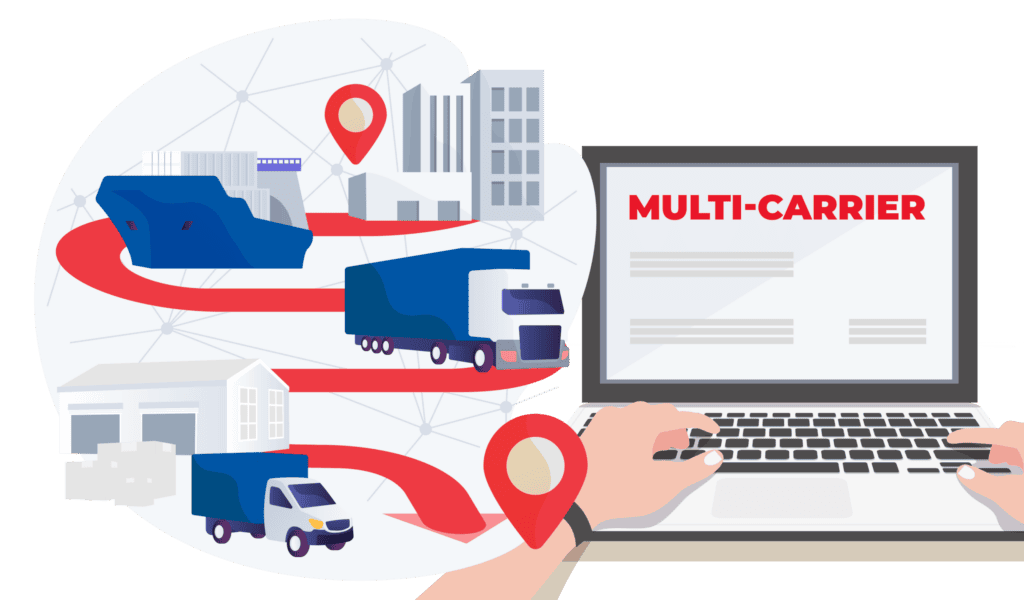
A multi-carrier strategy means not relying on a single provider. Instead, you select the best mode for each shipment based on weight, urgency, and destination.
How It Works in Practice
- Samples and small restocks: Use express courier (DHL/FedEx) — fast, trackable, predictable.
- Bulk replenishment (over 100 kg): Use sea or air consolidation through a forwarder — cost-effective, with a clear 15–25 day timeline.
- Mid-range orders (20–100 kg): Split between air freight for urgent items and express for critical restocks.
Key principle: You are not choosing one carrier for everything. You are choosing a carrier for each shipment, based on its specific characteristics.
Why It Works for Australia
Australia’s geography, high biosecurity standards, and the AUD 1,000 de minimis threshold make multi-carrier particularly effective:
- Risk diversification: If one carrier is delayed or rejects a shipment, others are available.
- Cost control: You avoid paying express rates for goods that can travel by sea.
- Compliance management: Forwarders handle biosecurity and ISPM-15 for high-risk goods, while express carriers handle simpler shipments.
Postal vs Multi-Carrier: A Real-World Cost & Time Comparison
Scenario A: 5 kg Sample Order
| Option | Carrier | Transit Time | Cost (approx.) |
|---|---|---|---|
| Postal | ePacket | 10–20 days | $22 |
| Express | DHL | 3–5 days | $68 |
| Forwarder | Not viable for 5 kg | — | — |
Best choice: Express — the cost premium buys reliability and tracking for a low total cost.
Scenario B: 50 kg Urgent Restock
| Option | Carrier | Transit Time | Cost (approx.) |
|---|---|---|---|
| Express | DHL | 3–5 days | $1,500–$2,000 |
| Air Freight | Forwarder consolidation | 7–10 days | $500–$700 |
| Sea LCL | Forwarder | 15–25 days | $150–$250 |
Best choice: Air freight through a forwarder — half the cost of express with acceptable lead time.
Scenario C: 200 kg / 2 CBM Bulk Replenishment
| Option | Carrier | Transit Time | Cost (approx.) |
|---|---|---|---|
| Express | Not viable for 200 kg | — | — |
| Air Freight | Forwarder consolidation | 7–10 days | $1,600–$2,200 |
| Sea LCL | Forwarder | 15–25 days | $400–$600 |
Best choice: Sea LCL — the cost per kg drops dramatically, saving thousands compared to air.
Key Finding
The “multi-carrier” strategy does not mean using all carriers for every shipment. It means matching each shipment to the right mode, and being willing to switch based on weight, time, and cost.
The AUD 1,000 Threshold and GST: How Multi-Carrier Helps

The Rule in Brief
Australia’s de minimis threshold is AUD 1,000 — the highest among major economies. Shipments under this value may be exempt from customs duty and GST. Since 2018, GST applies to all commercial goods regardless of value, unless the total shipment value is under the AUD 1,000 threshold.
How Multi-Carrier Supports Cost Control
- Avoid trigger points: Keep individual commercial invoices under AUD 950 to stay safely below the threshold.
- Split by timing, not just value: Use express for the first 30 units (under AUD 950) and sea for the rest — ensuring you meet the launch deadline without paying GST on the entire shipment.
- Avoid the “split shipment” trap: Do not artificially split a single order into multiple sub-AUD 1,000 consignments for customs evasion — this is a red flag for the Australian Border Force and can lead to penalties .
Practical Example
You need 200 units of a $5 product (total AUD 1,000) delivered to Australia.
| Strategy | GST/Duty | Risk |
|---|---|---|
| Ship all 200 units as one order | 10% GST applies | None |
| Split into two shipments of 100 units (AUD 500 each) | GST exempt (if under AUD 1,000) | Risk of consolidation by customs |
| Ship 100 units by express (AUD 500) + 100 units by sea (AUD 500) | GST exempt on both | Lower risk — different modes, different timing |
Takeaway: A multi-carrier approach allows you to manage the threshold more effectively by using different modes for different parts of the same order.
Biosecurity: Why Multi-Carrier Matters for High-Risk Goods
The Inspection Reality
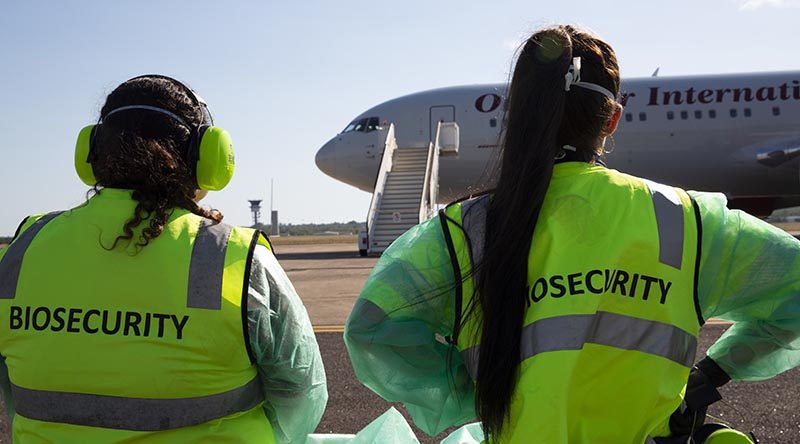
Australia’s biosecurity regime is among the strictest in the world. DAFF inspects consignments, and if they find:
- Pest contamination — treatment or destruction
- Non-compliant packaging — ISPM-15 violations lead to re‑export or destruction
- Suspected quarantine risk — hold for testing, delays of 3–7 days
Multi-Carrier Risk Diversification
If you ship all your goods through a single express courier and the shipment is flagged, the entire consignment is held — and your inventory disappears for days.
With a multi-carrier strategy:
- High-risk goods (wood, food, batteries) go through a forwarder who can pre-clear biosecurity and arrange ISPM-15 treatment before shipping.
- Low-risk goods (plastics, textiles) can go express with lower inspection likelihood.
- If one shipment is delayed, others are unaffected.
Cost impact: A biosecurity inspection costs $65 per 15 minutes — a 30-minute inspection adds $130 to your clearance bill. Multi-carrier reduces the chance of all your shipments being inspected at once .
How to Build a Multi-Carrier Strategy for Australia
Step 1: Classify Your Shipments by Weight and Urgency
| Weight | Urgent | Non-Urgent |
|---|---|---|
| Under 20 kg | Express | Postal/Express |
| 20–100 kg | Air Freight | Air Freight/Sea LCL |
| Over 100 kg | Air Freight (partial) | Sea LCL |
Step 2: Establish a Carrier Portfolio
- At least 2 express couriers — DHL and FedEx for Australia typically perform well.
- 1–2 freight forwarders — choose one experienced in biosecurity and one with good LCL consolidation to Australia.
- Review quarterly — which carrier performed best on cost, time, and handling?
Step 3: Use Tools for Monitoring
- Transit Matrix — estimate lead times for sea, air, and express across different Australian ports.
- HS Code Lookup — verify classification before shipping. The HS code determines whether biosecurity controls apply and whether import permits are required.
Step 4: Plan Seasonally
- January–June: Stable transit times. Use sea for base inventory, express for samples and launch orders.
- July–December: Peak season (Black Friday, Christmas). Book sea freight 8–10 weeks ahead; transition urgent items to air freight to avoid port congestion.
Step 5: Review and Adjust
After each shipment, record:
- Actual transit time vs. estimate
- Carrier cost vs. quote
- Any biosecurity or customs issues
Use this data to refine your mode selection for the next order.
Conclusion
Shipping to Australia is not about finding the “best” carrier — it is about choosing the right one for each shipment. Postal is cheap but unpredictable. Express is fast but expensive. Freight forwarders are cost-effective for bulk but require compliance knowledge.
A multi-carrier strategy does not mean complexity. It means planned flexibility — knowing when to use express for urgent orders, when to shift to air freight for mid-sized shipments, and when to commit to sea freight for bulk replenishment.
For Alibaba buyers, the cost savings are real. By switching from express to sea LCL for a 200 kg shipment, you can save $1,000–$1,500 — enough to cover the freight cost of your next two orders.
Plan ahead. Know your thresholds. Verify your HS code. And always have a backup carrier ready. That is how you control costs without sacrificing reliability.