
Australia’s Biosecurity 2026: What Alibaba Buyers Must Know
Table of Contents
Australia’s biosecurity system is widely considered one of the world’s toughest. For Alibaba buyers shipping to the country, this means one thing: strict enforcement, minimal tolerance, and serious consequences for non-compliance.
The government has invested over $2 billion in additional biosecurity resourcing, deployed more than 1,000 biosecurity officers across airports, seaports and mail centres, and added 20 new detector dogs. In 2025 alone, biosecurity officers inspected over 280,000 commercial sea and air consignments. This guide explains what Australian importers need to know.
Why Australia Takes Biosecurity So Seriously
Australia’s island geography and unique ecosystems make it exceptionally vulnerable to invasive pests and diseases. The agriculture, fisheries and forestry industries are worth over $100 billion to the economy, and a major outbreak could devastate livelihoods and food supply.
The government will “never compromise on biosecurity“. This means every commercial consignment is subject to scrutiny, and the consequences for deliberate rule-breaking are severe.
The Penalty Reality
Under the Biosecurity Act 2015, individuals convicted of illegal importation face penalties of up to 10 years’ imprisonment and fines of up to $1.6 million. Corporate entities can be fined, civilly prosecuted, and have their registrations revoked under the Export Control Act 2020.
Real-world examples from 2025:
| Case | Offence | Penalty |
|---|---|---|
| Sydney woman | 62 tonnes illegal pork, insect-infested fruit, frog meat | 24 months imprisonment |
| Another woman | Mis-declared package as lingerie when it contained 57 cacti | 6 months imprisonment |
| Australian grape exporter | False documentation for phytosanitary certificates | $1M+ fine |
These cases illustrate that both individuals and companies are held accountable.
Goods Most Likely to Trigger Biosecurity Checks
High-Risk Categories
Australia’s Department of Agriculture, Fisheries and Forestry (DAFF) enforces strict controls on:
- Food products – Almost 64 tonnes of meat products were confiscated in 2025
- Plant and plant products – Strict phytosanitary requirements apply
- Wood and timber packaging – Must be treated and bark-free
- Seeds for sowing – New documentation requirements effective 2026
- Animal products – Hides, fibres, and derivatives are controlled
- Batteries and dangerous goods – Special handling required
- Soil and organic material – Contaminated containers are treated or rejected
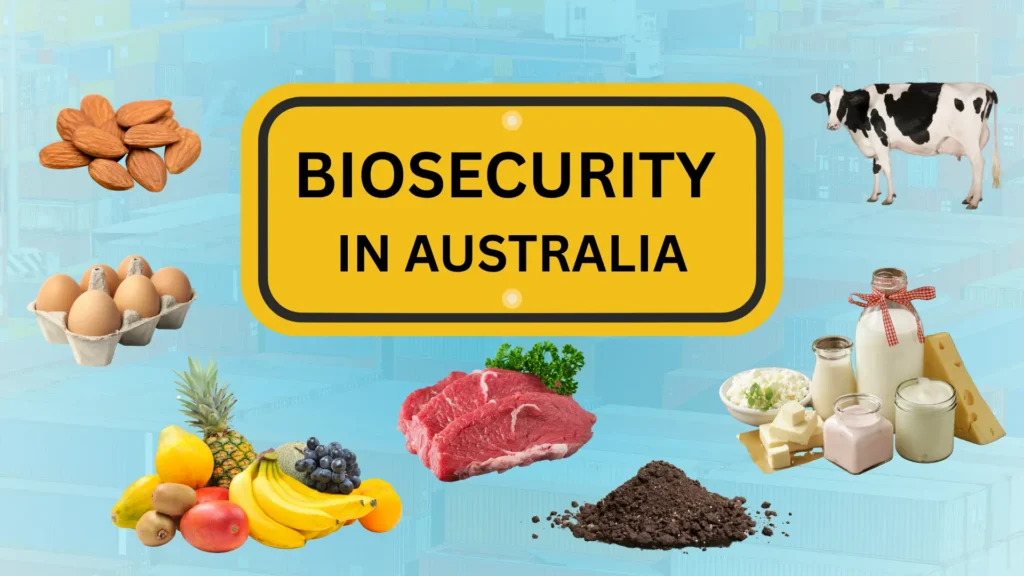
Specific Alibaba Product Categories at Risk
| Product Category | Biosecurity Risk | Action Required |
|---|---|---|
| Wooden furniture, bamboo products | Pests, fungi, wood-boring insects | ISPM-15 treatment certificate, bark-free |
| Food items (spices, dried fruit, supplements) | Plant diseases, insect infestation | Quarantine permit, phytosanitary certificate |
| Seeds, grains, plant-based powders | Invasive species risk | BICON case check, scientific name verification |
| Leather and animal-derived goods | Animal disease transmission | Treatment certification |
| Battery-powered products | Dangerous goods (lithium) | UN38.3 documentation, certified transport |
| Cosmetics and liquids | Chemical/biological risk | Ingredient declaration |
Container Cleanliness
All containers entering Australia must be clean – no soil, grain, snails, insects, or plant/animal material. A cleanliness declaration is mandatory. Contaminated containers will be sent for treatment, causing delays and additional charges.
How to Prepare Your Shipment
Step-by-Step Preparation
1. Use clean containers – Check inside and outside for contamination
2. Provide a packing declaration – Details of container cleanliness and packing material use
3. Ensure timber packaging is compliant – Must be treated under ISPM-15 and free of bark
4. Avoid prohibited packing materials – No straw, used bags/sacks, or fruit/vegetable cartons
5. Check BICON for specific conditions – The Biosecurity Import Conditions system (BICON) lists requirements for your product
6. Use offshore treatment where permitted – Some treatments can be applied before shipment
Documentation Requirements
Australia requires detailed documentation for many commercial imports:
- Phytosanitary certificates for plants and plant products
- Treatment certificates for wood packaging
- Packing declarations with container cleanliness information
- Scientific name verification for seeds and related products (new 2026 requirement)
- Customs broker – A licensed Australian customs broker is recommended for commercial imports
The “Super Strict” Reality
Australia’s biosecurity regime is a first-tier enforcement system. Inspections are thorough, penalties are severe, and the authorities have both the resources and the mandate to enforce the rules strictly.
Key indicators of the enforcement intensity:
| Metric | 2025 Data |
|---|---|
| Travellers intercepted at airports | 359,000+ |
| Commercial consignments inspected | 280,000+ |
| Meat products confiscated | 64 tonnes |
| Items seized by detector dogs | 40,000+ |
Practical Checklist for Alibaba Buyers
| Step | Task | Status |
|---|---|---|
| 1 | Check BICON for your product’s specific biosecurity conditions | [ ] |
| 2 | Ensure timber packaging is ISPM-15 treated and bark-free | [ ] |
| 3 | Provide accurate packing declaration and container cleanliness statement | [ ] |
| 4 | Obtain phytosanitary certificates for plant-based goods | [ ] |
| 5 | If goods contain seeds, confirm scientific name documentation is ready | [ ] |
| 6 | For batteries, arrange certified dangerous goods transport (DHL EV CoE or similar) | [ ] |
| 7 | Use a licensed Australian customs broker | [ ] |
| 8 | Verify your HS code – classification errors can lead to incorrect biosecurity treatment | [ ] |
Conclusion
Australia’s biosecurity system is strict, well-resourced, and vigorously enforced. Non-compliance is not a minor administrative issue—it can result in imprisonment, six-figure fines, and permanent damage to your supply chain reputation.
The solution is preparation. Check BICON for your product’s requirements. Use clean containers and proper packaging. Obtain the right certificates. And for batteries and dangerous goods, use certified logistics providers like DHL’s new EV Centre of Excellence.
Use our HS Code Lookup to verify your product’s classification—the correct HS code is the first step to identifying applicable biosecurity conditions. Use our Transit Matrix to plan shipping timelines that account for potential biosecurity inspections.