
Understanding US-China Tariff Stacking: Section 301 and Section 122 Replacement
Table of Contents
Tariff stacking is the new normal for Chinese imports in 2026.
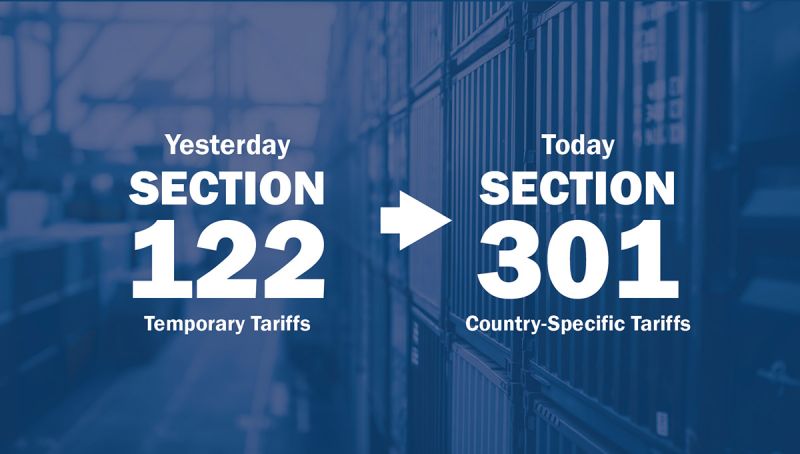
Here is what changed: the 10% Section 122 surcharge expired on July 24, 2026. A new 12.5% Section 301 “forced labor” tariff replaced it for Chinese goods . But the old Section 301 tariffs on EVs, semiconductors, and batteries did not go away. They are still there—and they now stack with the new tariff.
This guide explains the stacking mechanism, which products are affected, and how to calculate your total tariff exposure.
The Timeline: What Expired and What Replaced It
Section 122 Was Always Temporary
The Section 122 tariff was introduced in February 2026 after the Supreme Court struck down IEEPA tariffs. Under Section 122 of the Trade Act of 1974, the President can impose tariffs up to 15% for a maximum of 150 days—unless extended by Congress .
That 150-day clock ran out on July 24, 2026 .
Section 301 Provides a Permanent Framework
On July 23, 2026, USTR finalized new Section 301 tariffs targeting 60 economies over forced labor concerns . For Chinese goods, the rate is 12.5%. This is not a temporary measure—Section 301 provides a sustained legal framework that bypasses the 150-day congressional approval limit .
The key point: The new 12.5% Section 301 tariff replaces the expired Section 122 surcharge. But it is a separate tariff layer from the existing Section 301 tariffs that have been in place since 2018.
The Stacking Mechanism: How Tariffs Add Up
Existing Section 301 Tariffs Remain in Effect
The tariffs from the original Section 301 investigations (Lists 1, 2, 3, and 4A) are still active. These apply to specific product categories from China:
| Tariff List | Product Categories | Rate |
|---|---|---|
| List 1 | Machinery, electronics, medical devices | 25% |
| List 2 | Semiconductors, plastics, chemicals | 25% |
| List 3 | Consumer goods, textiles, furniture | 25% |
| List 4A | Electronics, footwear, toys | 7.5% |
These rates were confirmed in USTR’s four-year review and remain in effect .
2026 Tariff Increases on Strategic Products
Beyond the existing lists, the 2024-2026 tariff hikes raised rates on specific strategic products :
| Product | HTS Code | 2026 Rate |
|---|---|---|
| Electric vehicles | 8703.80.0000 | 100% |
| Semiconductors | 8542.31.0000 | 50% |
| Lithium-ion batteries (vehicle) | 8507.60.0020 | 25% |
| Lithium-ion batteries (non-vehicle) | Various | 25% (effective 2026) |
| Solar panels | Various | 50% |
These rates stack with the new 12.5% forced labor tariff.
Total Tariff Calculation Example
Product: Lithium-ion battery for EV (HTS 8507.60.0020)
| Tariff Component | Rate |
|---|---|
| MFN duty (Column 1) | 3.4% |
| Section 301 List 4A (existing) | 7.5% |
| Section 301 strategic increase (2026) | 25% |
| Section 301 forced labor (new) | 12.5% |
| Total tariff rate | 48.4% |
A $10,000 shipment would owe approximately $4,840 in duties—before customs fees and VAT.
Products Exempt from the New Tariff
Section 232 Products Are Exempt
Goods already subject to Section 232 tariffs (steel, aluminum, and certain derivatives) are exempt from the new 12.5% forced labor tariff . The administration carried forward this exemption framework from the Section 122 program.
Critical note: Some industry groups have argued that Section 301 tariffs should stack on top of Section 232 tariffs to strengthen trade remedies . As of July 2026, they do not stack—but this could change.
Other Exemptions
The new tariff also exempts :
- USMCA-compliant goods from Mexico and Canada
- Products loaded before July 24, 2026 and entered by July 28, 2026
- Certain raw materials where tariffs would cause domestic shortages
- Products covered by reciprocal trade agreements (may face 10% cap instead of 12.5%)
Product Examples: Tariff Stacking in Action
Electric Vehicles
HTS: 8703.80.0000
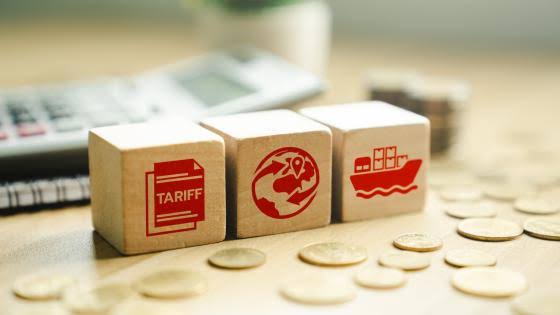
A Chinese EV faces the 100% Section 301 strategic tariff plus the 12.5% forced labor tariff. The effective rate makes direct imports commercially unviable . As one analysis notes, “with no US-market price tolerance for a doubling of CIF cost, the trade flow effectively goes to zero” .
Semiconductors
HTS: 8542.31.0000
The 50% strategic tariff stacks with the 12.5% forced labor tariff—on top of MFN duties. Total exposure exceeds 60% for most semiconductor imports from China .
Consumer Electronics
HTS: 8517.13.0000 (Smartphones)
Consumer electronics subject to List 4A (7.5%) now face the additional 12.5% forced labor tariff. Total tariff burden is approximately 20% plus MFN.
Textiles and Apparel
HTS: Various
Textile imports face List 3 tariffs (25%) plus the 12.5% forced labor tariff—a combination that “embed a baseline cost addition of 10 to 12.5 per cent of customs value across sourcing hubs” .
How to Calculate Your Total Tariff Exposure
Step-by-Step
- Identify the 10-digit U.S. HTS code for your product
- Check the MFN duty rate in the USITC HTS database
- Check Section 301 List status (List 1, 2, 3, or 4A)
- Check for strategic tariff increases (EV, semiconductors, batteries, solar)
- Add the 12.5% forced labor tariff (if product is from China and not exempt)
- Sum all rates for total tariff burden
Tools to Help
- USITC HTS Database – Official tariff rates and Chapter 99 codes
- USTR Section 301 Search Tool – Check if your product is covered
- HS Code Lookup – Start with product description to identify codes
Final Thoughts
Tariff stacking is the defining feature of the 2026 U.S. tariff regime. The 10% Section 122 surcharge is gone—replaced by a 12.5% Section 301 tariff. But existing tariffs remain. For Chinese goods, multiple layers now apply to most product categories.
Calculate your total tariff exposure before you confirm your order. The difference between 25% and 50% can determine whether your product is profitable.