
2026 Section 301 Tariffs by HS Code: Duty Rates Explained
Table of Contents
The Section 301 tariff by HS code is the single number that decides how much extra duty you pay on goods made in China. Get the classification one digit off and the same container can swing from a 7.5% surcharge to a 25% surcharge, a 17.5-point difference on the same goods. The good news: unlike most trade policy, this is something you can look up yourself before you ever place an order.
Most new Alibaba and 1688 buyers treat the tariff as a mystery buried in a broker’s invoice. It isn’t. Your product’s 10-digit HTS code determines which of the four Section 301 “lists” applies, and each list carries a fixed, published rate stacked on top of the normal MFN duty. In this guide we walk through the rates by product family, the 2024–2026 targeted increases, the exclusion mechanism that can zero out the surcharge, and a worked China-vs-Vietnam cost comparison so you can see the dollars behind the percentages.
Key takeaways
– The Section 301 tariff by HS code adds 25% on Lists 1–3 and 7.5% on List 4A, on top of the base MFN rate. Since 2026-07-24 a 12.5% forced-labor layer stacks on top for China/HK and Tier-2 origins, so a wooden-furniture import (9403.60) with 0% MFN pays 37.5% total.
– Your 10-digit HTS, not the supplier’s 6-digit code, sets your 301 exposure; one subheading digit can move a product from a 7.5% list to a 25% list.
– Targeted 2024–2026 increases raised electric vehicles to 100% and solar cells to 50%, with phased hikes on steel, aluminum, and critical minerals.
– 178 exclusions remain in force through November 10, 2026, claimed by filing a Chapter 99 sub-code (9903.88.xx).
– A 12.5% forced-labor Section 301 surcharge applies to China/HK and Tier-2 economies including Vietnam (effective 2026-07-24), and stacks on top of the existing China 301; USMCA Mexico is exempt. ⚠️ Verify the live rate and exact Chapter 99 sub-code (9903.05.20–.84) against the Federal Register before you rely on it.
Section 301 in 30 Seconds
Section 301 is a U.S. tariff action launched in 2018 after the Office of the U.S. Trade Representative found China’s trade practices harmed American interests. Rather than a single flat tax, it works as four tranches, called Lists 1, 2, 3, and 4A, each covering specific HTS subheadings of Chinese-origin goods.
The surcharge is stacked on top of the normal Most-Favored-Nation (MFN) rate. So if your cotton T-shirt carries a 16.5% MFN rate and sits on List 4A, your total duty is 16.5% + 7.5% = 24%. China-origin is the trigger for the Lists 1–4A surcharges; the same product made in Vietnam or Mexico escapes those lists. (Vietnam still carries the 12.5% forced-labor layer covered below; USMCA Mexico is exempt from it.)
What makes 301 unusual is that the rate is fully deterministic from the code. Once you know your 10-digit HTS, you can read your surcharge off a published list. No negotiation, no discretion. That is why getting the classification right is the highest-leverage cost move an importer can make. If you want the full mechanics of how the 6-digit HS becomes a 10-digit HTS, see our explainer on why the last 4 HTS digits set your 301 rate.
What is the Section 301 tariff rate by HS code?
Section 301 tariff by HS code is the additional U.S. duty applied to specific Chinese-origin products, set by which Section 301 “list” the product’s 10-digit HTS falls under: Lists 1–3 add 25% and List 4A adds 7.5%, each stacked on top of the base MFN rate. Targeted 2024–2026 products (EVs, solar, batteries) carry separate higher rates up to 100%.
Here is a quick reference using product families that commonly appear in Alibaba and 1688 orders:
| HTS / HS family | Product | Base MFN | Section 301 | Effective total |
|---|---|---|---|---|
| 6109.10 | Cotton T-shirts | 16.5% | List 4A +7.5% | 24.0% |
| 9403.60 | Wooden furniture | 0% | List 3 +25% | 25.0% |
| 9405 (e.g. 9405.42) | LED lamps & fixtures | ~3.9% | List 3 +25% | ~28.9% |
| 8507.60 | Lithium batteries / power banks | 3.4% | List 3 +25% | 28.4% |
| 8541.43 | Solar cells | 0% | 2024 review +50% | 50.0% |
| EVs / EV batteries / solar (targeted) | N/A | varies | 2024 review +100% / +50% | up to 100% |
Two things to notice. First, a low or zero MFN rate does not save you. Wooden furniture (9403.60) has 0% MFN but lands at 25% once 301 is added. Second, the targeted 2024–2026 products bypass the standard lists entirely and carry their own rates, which is where the 50% solar and 100% EV figures come from.
Mini example: Marco’s $900 surprise. In early 2026, a California buyer we’ll call Marco received a $4,200 duty bill on a $12,000 shipment of cotton T-shirts (6109.10). He had budgeted for the 16.5% MFN rate and expected about $1,980 in duty. He hadn’t accounted for the List 4A Section 301 surcharge of 7.5%, another $900. The fix was simple: he now runs our free HS Code Lookup on every reorder to confirm 301 status before he commits to a supplier’s price.
Not sure which list your product falls under? Use our free HS Code Lookup to look up your product’s HTS and 301 exposure before you buy. It shows the base MFN rate and the applicable surcharge side by side.
Lists 1–4A Explained
The four tranches were rolled out between 2018 and 2019, and their surcharge rates have been stable since (List 4A was cut from a planned 15% to 7.5% in 2020):
- List 1 (effective 2018): +25% over MFN. Covers roughly $34B of industrial and transport goods.
- List 2 (effective 2018): +25% over MFN. Approximately $16B of intermediate and capital goods.
- List 3 (effective 2019): +25% over MFN. Around $200B, and it is where most consumer goods live, including wooden furniture (9403.60) and LED lighting (9405).
- List 4A (effective 2020): +7.5% over MFN. The remaining ~$300B tranche, covering apparel (e.g. cotton T-shirts 6109.10), many consumer electronics, and toys.
The practical takeaway: Lists 1–3 all sit at 25%, so the “which list?” question usually collapses into a binary: 25% (Lists 1–3) versus 7.5% (List 4A). A product on no list pays only MFN (plus any origin-based forced-labor layer). Because the lists are defined by HTS subheading, the classification is what decides your rate; this is exactly why the last 4 HTS digits set your 301 rate.
The 2024–2026 Targeted Increases
In the 2024 Section 301 four-year review, USTR added a second layer of product-specific increases that do not follow the List 1–4A percentages. These are phased in through 2025 and 2026:
- Electric vehicles: raised to 100% (from 25%).
- EV batteries and battery parts: raised toward 25%, with lithium-ion batteries for EVs at the higher end.
- Solar cells (8541.43): raised to 50% (from 25%).
- Steel and aluminum: additional 301 measures layered on top of the Section 232 metals tariffs.
- Critical minerals and ship-to-shore cranes: new or increased coverage in selected subheadings.
These targeted rates are the reason a solar importer can face 50% while a furniture importer faces 25%. The product family, read through its HTS, is the whole story. If your catalog touches EVs, solar, batteries, or steel/aluminum, treat the targeted list as a separate check from the standard four tranches.
Exclusions: The 9903.88.xx Mechanism
Section 301 is not absolute. USTR has granted exclusions that temporarily suspend the surcharge for specific products. As of this writing, 178 exclusions remain in force, comprising 164 product-specific exclusions plus 14 covering certain solar equipment. They are valid through November 10, 2026, unless extended.
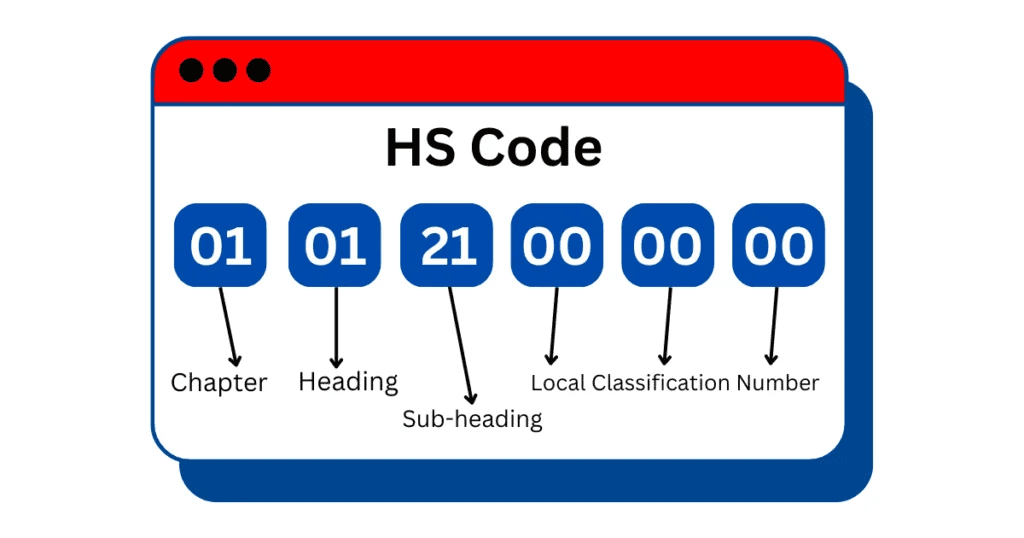
The mechanism matters as much as the list. An exclusion is claimed by filing a Chapter 99 sub-code, the 9903.88.xx series, alongside your normal 10-digit HTS at entry. If you file the product HTS but omit the correct 9903.88.xx code, you pay the surcharge even when an exclusion exists. The sub-code is product-specific, so you must match your exact HTS to the published exclusion number; a close-but-wrong code will not qualify.
Two cautions. First, exclusions expire. The current batch lapses November 10, 2026, and there is no guarantee of renewal. Second, never misclassify a product to reach an exclusion; that converts a legitimate saving into a misclassification risk under 19 U.S.C. 1592. The right move is to confirm whether your exact HTS has an active 9903.88.xx exclusion, file it correctly, and plan your reorder calendar around the expiry date.
The 12.5% Forced-Labor Surcharge (broad Section 301 action, effective 2026-07-24)
The Section 122 temporary 10% surcharge that ran under Proclamation 11012 hit its 150-day statutory cap and expired on July 24, 2026, without renewal. On the same day, a USTR final rule launched a new Section 301 forced-labor action covering roughly 60 economies. China and Hong Kong sit in the 12.5% tier alongside other Tier-2 economies including Vietnam; 19 further economies face a 10% tier. USMCA-qualifying Mexico is exempt from this layer (0%).
For China, the 12.5% forced-labor layer stacks on top of the existing China Section 301, so a List 3 product can now carry MFN + 25% + 12.5% = 37.5% (it does not stack on Section 232 steel/aluminum, which are carved out). The action has no scheduled expiry and is filed under new Chapter 99 sub-codes 9903.05.20–.84. ⚠️ Confirm the live rate and the exact sub-code for your product in the Federal Register before you lock any costing model, and run landed-cost estimates with and without the 12.5% line so a change does not blindside your margin.
How Your HTS Choice Changes Landed Cost
Classification does not just change a percentage. It changes the cash you wire to customs. The clearest illustration is a $10,000 shipment of consumer electronics, comparing China-origin, Vietnam-origin, and USMCA Mexico (freight/broker/last-mile are illustrative, ~$1,720 China/Vietnam, ~$1,300 Mexico):
| Scenario | Product value | Duties + fees + freight | Landed cost |
|---|---|---|---|
| China-origin | $10,000 | ~$5,517 (301 25% $2,500 + forced-labor 12.5% $1,250 + MPF/HMF ~$47 + freight) | $15,517 |
| Vietnam-origin | $10,000 | ~$3,017 (forced-labor 12.5% $1,250 + MPF/HMF ~$47 + freight) | $13,017 |
| Mexico-origin (USMCA) | $10,000 | ~$1,335 (MPF/HMF ~$47 + freight, no forced-labor) | $11,335 |
The China–Vietnam gap is still about $2,500, but the driver has changed. Both origins now pay the 12.5% forced-labor layer, so this is no longer “Vietnam pays zero 301.” It is the 25% China Section 301 differential that attaches to the Chinese HTS but not the Vietnamese one. Mexico, exempt under USMCA, sits lowest of the three.
Mini example: GreenVolt’s $2,500 decision. When the electronics importer “GreenVolt” repriced a $10,000 order after the July 2026 rule change, the China-vs-Vietnam landed-cost gap was still $2,500 (China ~$15,517 vs Vietnam ~$13,017), but the reason shifted. Both now pay the 12.5% forced-labor layer; the gap is the 25% China Section 301 on the exposed SKUs. GreenVolt moved 40% of those 301-exposed SKUs to a Vietnamese supplier and kept the rest in China for speed-to-market. The split cut the China 301 portion of its duty bill by 40%, about $1,000 per $10,000 order, without sacrificing lead time.
Want to see the full landed-cost math for your own order? Estimate your landed cost with the import duty calculator. It stacks MFN, the existing China 301, the 12.5% forced-labor layer, and MPF/HMF automatically so you can compare origins side by side.
Sourcing Moves That Cut 301 Exposure
Shifting origin still cuts your Section 301 bill. But after July 2026 the math changed. Vietnam no longer means “zero 301.” It means zero China 301 lists: a Vietnamese supplier still pays the 12.5% forced-labor layer, but avoids the 25% China List 3/4A surcharges. So the ~$2,500 China–Vietnam gap on a $10k order is now the 25% China 301 differential, not a full exemption. The U.S. still applies a substantial transformation test: simply transshipping Chinese goods through a third country does not change origin, and the forced-labor layer follows the country of origin regardless.
Common, legitimate strategies:
- Vietnam for apparel, furniture components, and electronics assembly: you shed the 25% China 301 on those SKUs but keep the 12.5% forced-labor layer (the ~$2,500-per-$10k gap above reflects exactly that).
- Mexico for proximity to the U.S. market and USMCA preferences: now the stronger play, since USMCA-qualifying Mexico is exempt from the forced-labor layer entirely (0%) and lands lowest of the three (~$11,335 vs China’s ~$15,517 on the same $10k).
- Diversified suppliers so 301-exposed SKUs source offshore while non-exposed or speed-sensitive SKUs stay in China.
Before you move, confirm the replacement supplier’s HTS and country of origin with a licensed broker, and keep documentation of where substantial transformation occurs. Origin claims are routinely checked at customs clearance, and a weak origin file can undo the savings.
Mini example: Oakline’s classification discipline. A small furniture brand, “Oakline,” almost chased the wrong saving. Its wooden bookcases (9403.60) correctly carried the List 3 25% rate. Oakline’s broker initially proposed a general “furniture parts” code that did not carry 301, which would have been misclassification, not a legal exclusion. Once correctly filed as 9403.60, Oakline paid the right 25% and claimed no exclusion because none applied. The lesson: don’t lower your 301 bill by misclassifying; CBP can assess back duties and penalties that dwarf the saving.
Conclusion
Your Section 301 tariff by HS code is not a broker’s secret. It is a published, lookup-able number driven entirely by your 10-digit HTS. Lists 1–3 add 25%, List 4A adds 7.5%, and the 2024–2026 targeted increases push EVs to 100% and solar cells to 50%. A correct classification, a checked 9903.88.xx exclusion, and an origin decision can each move your landed cost by thousands of dollars on a single shipment.
Start with the complete 2026 HS code & classification guide, then look up your HTS to see your exact Section 301 rate before you buy. When you are ready to price the whole shipment, estimate your landed cost and review how duties are assessed at customs clearance so there are no surprises at the border.
FAQ
What is the Section 301 tariff rate by HS code?
The Section 301 tariff by HS code is the extra U.S. duty on Chinese-origin goods, set by which 301 “list” the product’s 10-digit HTS falls under: Lists 1–3 add 25% and List 4A adds 7.5%, each stacked on the base MFN rate. Targeted 2024–2026 products (EVs, solar, batteries) carry separate rates up to 100%.
How do I find which Section 301 list my product is on?
Identify your product’s 10-digit HTS (not the supplier’s 6-digit HS), then check it against the published List 1–4A subheadings or use a lookup tool. The HTS subheading determines the list; the list determines the rate. See why the last 4 HTS digits set your 301 rate.
Are there any Section 301 exclusions still active in 2026?
Yes. As of August 2026, 178 exclusions remain in force (164 product-specific plus 14 solar-related), valid through November 10, 2026. They are claimed by filing the correct Chapter 99 sub-code (9903.88.xx) with your HTS at entry.
What is the difference between Section 301 and the forced-labor surcharge?
Section 301 is the China-origin-specific set of Lists 1–4A plus the 2024–2026 targeted products (EVs, solar, batteries). The forced-labor surcharge is a separate Section 301 action launched July 24, 2026 covering ~60 economies, China/HK and Tier-2 economies like Vietnam at 12.5%, 19 others at 10%, with USMCA Mexico exempt. For China it stacks on top of the existing China 301 lists; it does not stack on Section 232 steel/aluminum. ⚠️ Verify the live rate and exact Chapter 99 sub-code (9903.05.20–.84) against the Federal Register before you rely on it.
Can I avoid Section 301 by sourcing from Vietnam instead of China?
Partly. Vietnam-origin goods avoid the existing China 301 lists (the 25% / 7.5% surcharges), which is why a $10,000 electronics order lands at about $13,017 from Vietnam versus $15,517 from China, a ~$2,500 gap driven by the 25% China 301 differential. But Vietnam still pays the 12.5% forced-labor layer (it sits in the same Tier-2 bracket as China), so “Vietnam = zero tariff” is no longer true. For a full escape from the forced-labor layer, USMCA-qualifying Mexico is exempt (0%). Either way, you must meet the substantial-transformation origin test; mere transshipment through a third country does not change origin, and the forced-labor layer follows the country of origin.