
Section 301 Tariff Exclusions: Which HS Codes Are Exempt in 2026?
Table of Contents
The new Section 301 tariffs that took effect July 24, 2026 apply to imports from 60 economies—including China—at rates of 10% to 12.5% . But not every product is covered. The USTR included a broad exemption framework that continues the approach used under the previous Section 122 tariff program .
For Alibaba buyers, the critical question is: does my product qualify? This guide explains the exemption categories, the specific rules that apply, and why you should never assume your product is automatically exempt.
Broad Exemption Categories
Section 232 Products Are Exempt
All products already subject to Section 232 tariffs are exempt from the new Section 301 tariffs . This includes:
- Steel and aluminum products
- Copper and copper products
- Automobiles and automotive parts
- Lumber and wood products
- Semiconductors
This exemption framework was carried forward from the Section 122 program and remains unchanged under the new Section 301 regime . If your product already pays Section 232 duties, it does not pay the new Section 301 tariff.
In-Transit Goods
Shipments that meet both of the following conditions are exempt from the new tariff :
- Loaded onto a vessel before July 24, 2026, 12:01 AM Eastern Time
- Entered for U.S. consumption or withdrawn from warehouse before July 28, 2026, 12:01 AM Eastern Time
This is a limited grace period for goods already in transit when the tariffs took effect.
Informational Materials, Donations, and Accompanied Baggage
Books, informational materials, charitable donations, and accompanied personal baggage are exempt from the new Section 301 tariffs . This is a standard exemption that applies across most U.S. tariff regimes.
Raw Materials and Products Causing Domestic Shortages
USTR identified five broad categories for exemption :
- Raw materials where tariffs could create domestic shortages
- Products that could cause economy-wide disruption
- Goods that cannot be produced in sufficient quantities in the U.S. at reasonable prices
- Products where tariffs would be ineffective in addressing the forced labor practices
- Specific products from economies with trade agreements that encourage full commitments
Practical examples: USTR exempted pig iron and steel scrap because U.S. steelmakers rely on imports and domestic supply is insufficient . A wide range of produce items—including tropical fruits like bananas, pineapples, and avocados—are also exempt because the U.S. cannot grow them in sufficient quantities .
USMCA and Country-Specific Treatment
USMCA-Compliant Goods from Mexico and Canada Are Exempt
Goods that qualify under the United States-Mexico-Canada Agreement (USMCA) are exempt from the new Section 301 tariffs . Non-compliant goods from Canada and Mexico still face the 10% tariff rate applicable to those countries, but compliant goods are fully exempt.
Country-Specific Exemptions
USTR granted additional country-specific exemptions based on trade agreements and forced labor commitments . Countries with specific product carve-outs include Argentina, Bangladesh, Cambodia, Ecuador, El Salvador, the European Union, Guatemala, Indonesia, Jordan, Malaysia, Switzerland, Taiwan, and the United Kingdom.
Textile Tariff Rate Quotas
For Bangladesh, Cambodia, Indonesia, and Malaysia, USTR established a three-year textile tariff-rate quota (TRQ) mechanism . Qualifying textile products can enter the U.S. free of Section 301 tariffs based on each country’s imports of U.S. cotton and textile inputs.
What This Means for Alibaba Buyers
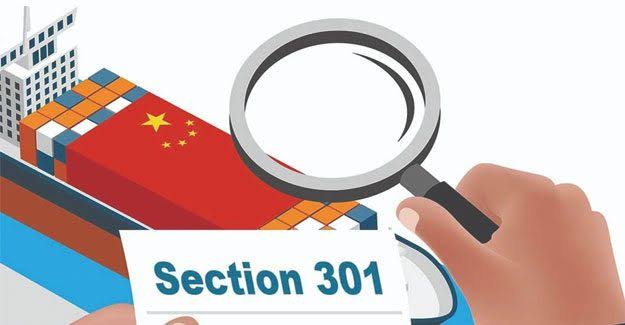
China’s Exemption Scope Is Limited
The exemptions for Chinese goods are narrower than for many other economies. China faces the 12.5% tariff rate and does not benefit from most country-specific carve-outs.
The 178 Section 301 exclusions—extended from the original China technology transfer investigation—remain in effect until November 10, 2026 . But these are product-specific exclusions, not broad exemptions. They cover specific HS codes and require claiming a Chapter 99 secondary code (9903.88.xx series) on your entry summary .
The exclusion request portal is currently closed. There is no path to obtain a new product-specific exclusion . If your product is not on the active exclusion list, your options are limited.
Do Not Assume “General Exemption”
The most common mistake Alibaba buyers make is assuming that because some products are exempt, their product is too. This is almost always wrong. Each exemption is tied to a specific HS code, and the exemption must be claimed using the correct Chapter 99 secondary code .
If you file only the primary HTS classification without the Chapter 99 exclusion code, CBP will charge the full Section 301 rate .
How to Check Your Product’s Exemption Status
Step 1: Identify Your 10-Digit U.S. HTS Code
Do not rely on your supplier’s code. Use the USITC HTS database to find the correct 10-digit U.S. classification.
Step 2: Check Against the Exemption List
The full list of exemptions is published in the Federal Register notice accompanying the USTR announcement . Verify whether your specific HTS code appears on the exemption list.
Step 3: Check for Section 232 or USMCA Exemption
If your product is subject to Section 232 tariffs (steel, aluminum, etc.), it is exempt from the new Section 301 tariff. If your goods qualify under USMCA, they are also exempt.
Step 4: Check the 178 Product-Specific Exclusions
The 178 exclusions from the original China Section 301 investigation are active until November 10, 2026 . Check if your HTS code is covered and confirm the Chapter 99 code required for claiming the exclusion at entry.
Step 5: Consult a Customs Broker
If your product is complex, high-value, or falls in a gray area, consult a licensed customs broker. A broker can verify the exemption status and ensure you claim it correctly on your entry summary.
Final Thoughts
Exemptions from the 2026 Section 301 tariffs exist, but they are not universal. Section 232 products, USMCA-compliant goods, and specific raw materials are exempt. The 178 product-specific exclusions from the original China investigation continue until November 2026. But China’s exemption scope is narrow.
Do not assume your product is exempt. Verify its HS code against the official exemption list. If you are unsure, consult a customs broker. A few minutes of research upfront can save thousands of dollars in unexpected tariff charges.
Use our HS Code Lookup tool to start identifying the correct U.S. HTS code. Then verify exemption status against the official sources.