
HS Code for Alibaba Buyers: Find the Right Code
Last updated: August 10, 2026
Getting the wrong HS code for Alibaba buyers is the fastest way to watch a perfectly good shipment get stuck at the border, hit with a surprise duty bill, or sent all the way back across the ocean. The code your supplier pastes onto the invoice is often a convenient guess, not a real classification, and customs officers at your destination couldn’t care less whose guess it was—their automated systems run real-time checks against your product description and declared value, and any mismatch triggers a red flag. You can find the correct code yourself in four steps. Below we walk through each one and show you a free lookup tool that does the searching.
Key takeaways
– The HS code on your Alibaba or 1688 listing is a starting hint, not a guarantee. In one Zhejiang Yiwu sample, 18.7% of cross-border sellers who reused platform default codes faced extra duty or returned goods at destination.
– A correct HS code does two jobs: it tells customs what your product is, and it decides how much duty you pay.
– The global 6-digit HS root is shared by almost every country, but your destination adds 3 to 4 digits to set the exact rate (the US uses a 10-digit HTS).
– You can find the right code in 4 steps: describe the product precisely, run it through a lookup tool, verify the 6-digit subheading, then get the full 10-digit code for your market.
– When the product is complex, high-value, or regulated, a licensed customs broker is worth the fee. Misclassification penalties can reach multiples of the duty owed.
Most new Alibaba and 1688 buyers assume the supplier’s code is “official.” It isn’t. Suppliers are experts at manufacturing and exporting; they are rarely experts at classifying goods for your country’s tariff schedule. We’ll show you how to take control of this step, why the listing code frequently fails, and exactly how to land on the code that clears customs cleanly. By the end, you’ll have a repeatable method, and you can verify your code in the our free HS Code Lookup tool before you ship.
What an HS Code Actually Is (and Why Alibaba Buyers Need It)
The Harmonized System (HS) is a numerical language for traded goods, maintained by the World Customs Organization (WCO). Nearly every country uses the same first six digits to describe a product, which is why a “phone” is roughly recognizable to customs in Tokyo, Hamburg, and Los Angeles. Those six digits are the global root.
For Alibaba buyers, the HS code matters for one blunt reason: it is the key that unlocks your duty rate. Every tariff, every surcharge, and every restriction is attached to a code. Get the code right and your landed cost is predictable. Get it wrong and you can be overpaying, underpaying (and owing penalties later), or blocking your own container at the port.
The 6-digit global root vs. your destination’s 10-digit code
Most buyers get stuck on what comes next. The first 6 digits are harmonized internationally, so a cotton T-shirt is “6109.10” whether you buy it from a factory in Yiwu or a shop in Milan. But countries then extend the code to fit their own tariff books:
- United States: adds 4 digits to a 10-digit HTSUS code (e.g., 6109.10.0011).
- European Union: adds 2 digits to an 8-digit CN code.
- China: uses a 10-digit code for its own export/import statistics.
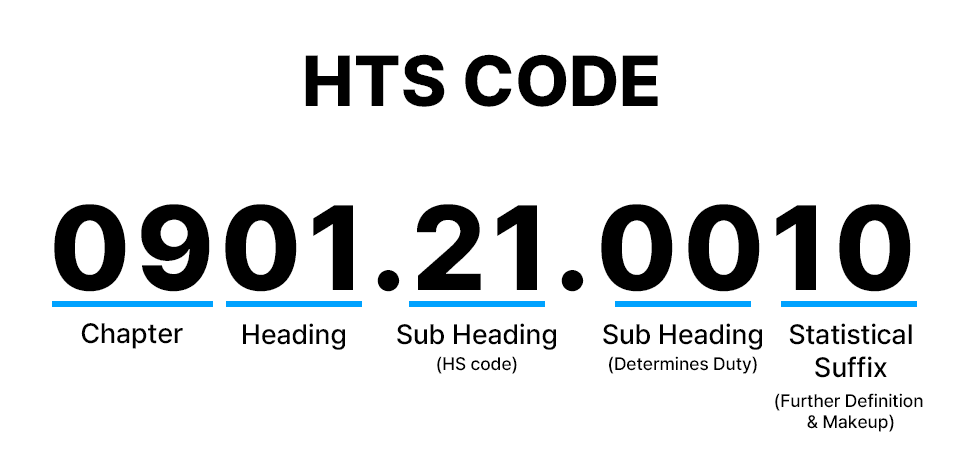
Those extra digits are not trivia. They are where your rate is set, where Section 301 China tariffs get applied, and where statistical tracking happens. If you only ever see a 6-digit number from your supplier, you have the root, not the full code your destination customs actually wants. You can read more about this split in our explainer on the difference between HS and HTS codes.
You don’t have to memorize any of this. The lookup tool shows the 6-digit root and the destination-specific extension side by side.
Why You Can’t Just Trust the Code on Your Alibaba Listing
This is the costliest mistake new buyers make. A 2023 study of cross-border e-commerce exporters in Yiwu, Zhejiang, China’s largest small-commodities hub, found that 18.7% of sellers who directly reused a platform’s default HS code ended up facing supplementary duties or returned shipments at the destination (Zhejiang cross-border compliance white paper). That’s nearly one in five. And when China’s customs authority tallied returned orders in 2023, 27.6% were traced back to classification errors. The product was fine; the code was the problem.
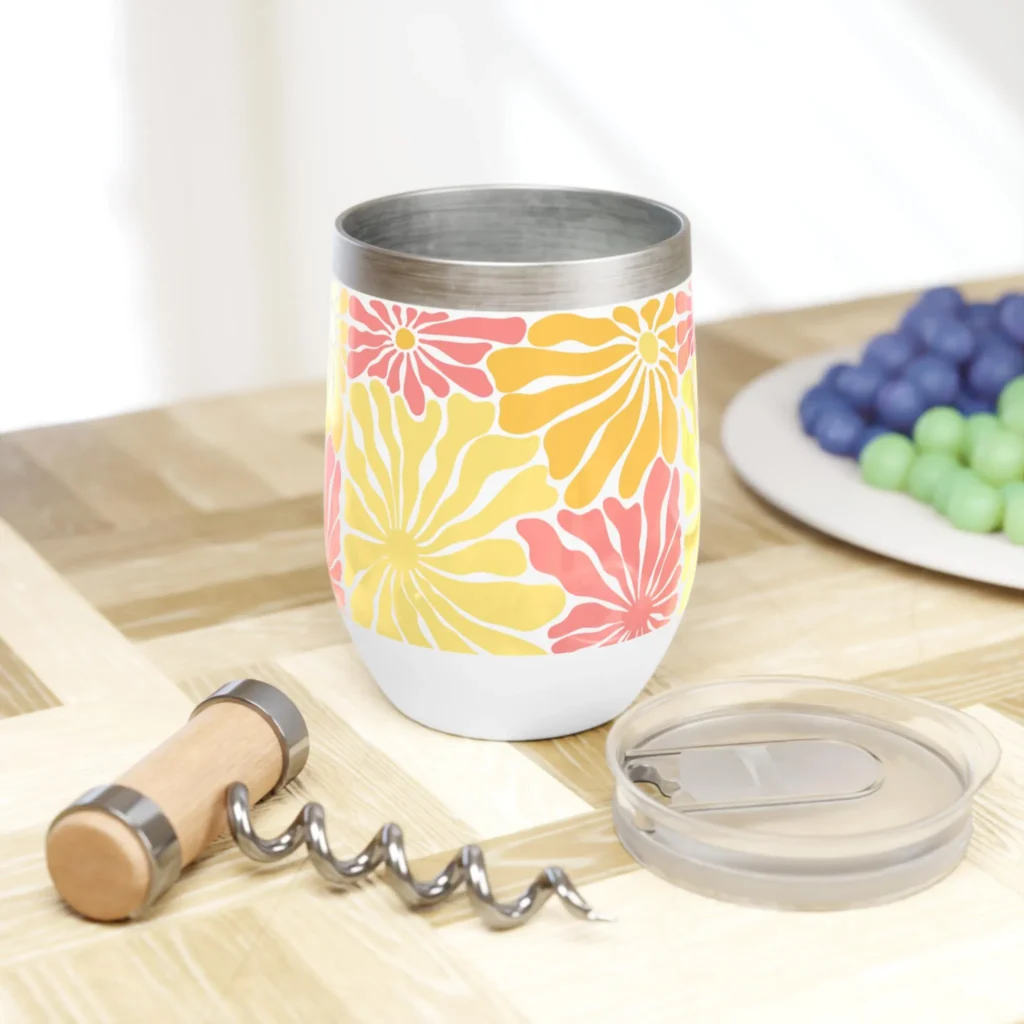
Mini example: Sarah runs a small Etsy store and ordered 400 stainless tumblers from an Alibaba Gold Supplier. The listing showed HS 9617.00 (vacuum flasks). She copied it onto her commercial invoice without checking. At the US port, CBP rejected the entry. The tumblers were classified under 7323.93 (tableware of stainless steel), a different chapter with a different rate. Her goods sat for nine days, she paid storage, and a broker had to refile. The product never changed; only the code did.
3 reasons supplier/platform codes get rejected at destination customs
- They optimize for the supplier’s export convenience, not your import duty. A Chinese exporter wants a code that clears China smoothly, which may not be the one your country uses to assess your duty.
- Listings are vague, and one listing can cover many codes. “Phone accessory” might span chargers (8504), cases (4202), and screen protectors (3920). A single default code can’t be right for all of them.
- The platform default is often “last time’s code.” Marketplaces recycle whatever was entered before. It is a memory, not a ruling, and memories drift.
None of this means suppliers are dishonest. It means the classification responsibility sits with you, the importer of record. Customs holds the buyer accountable, not the seller three time zones away. And with the US $800 de minimis exemption now suspended, even small parcels must be declared with a full 10-digit code and pay duty. There is no low-value shortcut left to hide a wrong code.
How to Find the HS Code for Alibaba Buyers in 4 Steps
To find the HS code for your product, write a precise description (what it’s made of, what it does, its shape), run it through a lookup tool, confirm the 6-digit subheading matches your product’s chapter, then extend it to your destination’s full 10-digit code.
This is the repeatable method we recommend for every Alibaba or 1688 order. Follow it before you pay for freight.
- Write a precise product description (material, function, form). Before you touch any tool, describe the item in customs language. Material (stainless steel), function (insulated drinking bottle), and form (500 ml, with lid). Vague descriptions produce vague codes; “gadget” is not a product.
- Run it through a lookup tool. Type that description into the our free HS Code Lookup tool. The tool returns candidate 6-digit headings with plain-English descriptions so you can match your item. This is faster and more reliable than trusting a marketplace drop-down.
- Verify the 6-digit subheading matches your product’s chapter. Confirm the chapter (first two digits) fits your product’s nature. A cotton T-shirt sits in Chapter 61; a cotton towel in Chapter 63. If the chapter feels wrong, the code is wrong, so keep narrowing. If you want a quick reference, browse common HS codes grouped by product category.
- Get the full 10-digit code for your destination market. Extend the confirmed 6-digit root to your market’s full code (10 digits for the US HTSUS), the number your broker files on the entry. US entries without it are rejected or held.
This four-step loop takes most buyers under ten minutes per product. Do it once, save the result, and reordering later is a copy-paste.
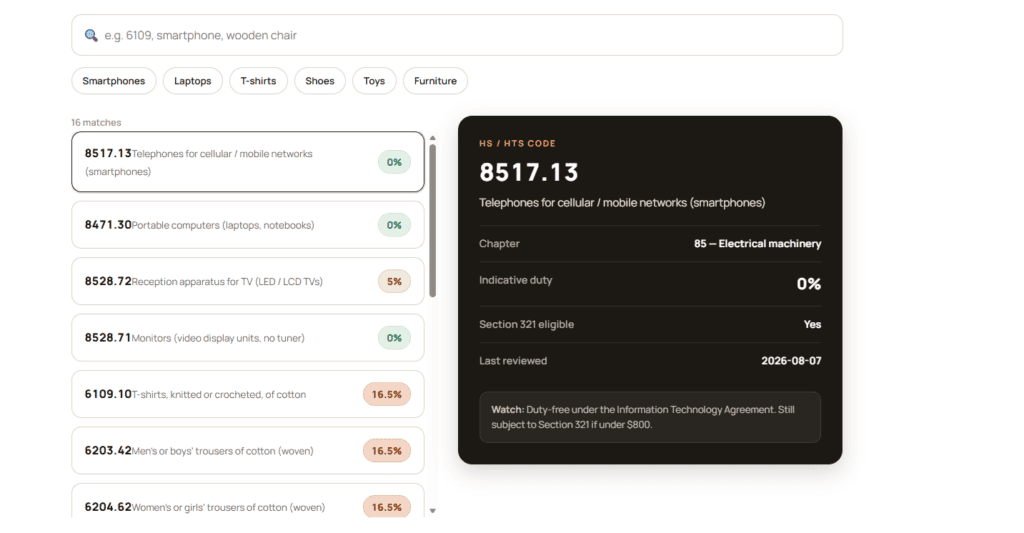
Ready to try it? Verify your code in the free HS Code Lookup before you ship. It’s the cheapest protection you can buy for a shipment.
Alibaba vs 1688: Does the Platform Change Your Code?
The right HS code is set by the product itself, what it’s made of, what it does, and what shape it takes, not by the site where you clicked “Buy”. Alibaba.com and 1688.com are both Chinese marketplaces, and neither issues an “official” code.
The practical difference is buyer profile. Alibaba.com targets international B2B buyers, so listings often include an English description and a suggested code. 1688.com is domestic-facing, so descriptions are in Chinese and codes follow China’s own 10-digit book. If you source on 1688, translate the specs yourself and confirm the destination code. The classification logic is identical. The platform is just a storefront.
One caution for 1688 buyers: because listings are China-centric, the default code you see is even more likely to be a Chinese export code rather than your destination’s import code. Run it through the lookup and confirm the extension before you ship.
When to Call a Licensed Customs Broker
You can self-classify most straightforward products using the steps above. But there are clear moments when a licensed customs broker earns their fee:
- The product is technical or multi-function. A device that heats, blends, and charges may straddle several chapters. Brokers know the “chief function” rules that decide the code.
- The value is high. When a single shipment is worth tens of thousands of dollars, a 5% rate error is real money and real penalty exposure.
- The product is regulated. Anything touching food, cosmetics, electronics with batteries, or children’s items can carry licensing, labeling, or testing conditions tied to the code.
- You’ve been questioned before. If customs already flagged a prior entry, get a professional ruling before you repeat the pattern.
A broker can also request a formal classification ruling from customs, which gives you a defensible position if the code is ever challenged. For most first-time buyers ordering a few hundred dollars of goods, the free lookup plus the four steps are enough. For anything ambiguous or valuable, the broker call is cheap relative to the risk.
Mini example: A US importer bought $38,000 of LED grow lights listed loosely as “plant lamps.” He guessed the 6-digit HS 9405 (lamps) and filed without the full subheading. CBP classified them under 9405.42.8440 (other LED luminaires/lighting fittings), which carried a different rate and exposed that his product description and material specs were too vague to classify correctly. A 20-minute broker consult up front would have prevented the back duty and refile.
Common New-Buyer Mistakes
Most first shipments run into the same handful of errors. We’ve documented the seven that most often trigger fines, holds, and back duties in our guide to common HS code classification mistakes that trigger fines. The headline ones to avoid here:
- Trusting the listing code blindly. (See the 18.7% Yiwu stat above. This is the #1 error.)
- Filing the 6-digit HS instead of your market’s full code. US entries need the 10-digit HTSUS.
- Guessing material or function. Cotton vs. polyester can swing a T-shirt duty from 16.5% to 32%.
- Forgetting Section 301. Many China-origin codes carry an extra 25% or 7.5% surcharge, and your code decides whether it applies. Learn how your HS code sets your Section 301 tariff.
Skim that mistakes guide before your first shipment; it will save you the most common and most expensive lessons.
Conclusion
Finding the right HS code for Alibaba buyers isn’t mysterious. It’s a four-step habit: describe the product precisely, run it through a lookup tool, verify the 6-digit subheading, and extend to your destination’s full code. Don’t inherit a supplier’s guess. Nearly one in five buyers who inherit a supplier’s code ends up paying for it.
Start now: open the our free HS Code Lookup tool, enter your first product, and confirm the code before you book freight. For the full picture, see the complete HS code lookup & classification guide for China imports. Get the code right once, and every shipment after gets easier.
FAQ
What is an HS code and do I need one for Alibaba purchases?
An HS code is the numerical identifier customs uses to classify goods. Yes, you need one for every purchase—it determines your duty rate and whether your shipment clears.
Can I just use the HS code printed on my Alibaba supplier’s invoice?
Use it as a starting point, not as final. Suppliers often use a code meant for Chinese export, not your country’s import tariff. Always verify it yourself—you as the importer bear legal responsibility, even if the supplier fills in the form.
Is the HS code for 1688 different from Alibaba?
No. The code depends on what the product is made of, what it does, and its shape. Either way, confirm the destination-specific extension (e.g., the US 10-digit HTSUS) before shipping.
How many digits is a US import HS code?
The US uses a 10-digit HTSUS code. The first 6 digits are global; the last 4 set your exact duty rate. Filing only 6 digits will get your entry rejected or held.
What happens if I use the wrong HS code?
Delays, duties, or penalties. In the US, fines can reach multiples of the underpaid duty. In China, fines range from 5% to 30% of the goods’ value. Customs’ automated systems flag mismatches between your code, description, and value—so errors don’t go unnoticed.