
What a commercial invoice must show
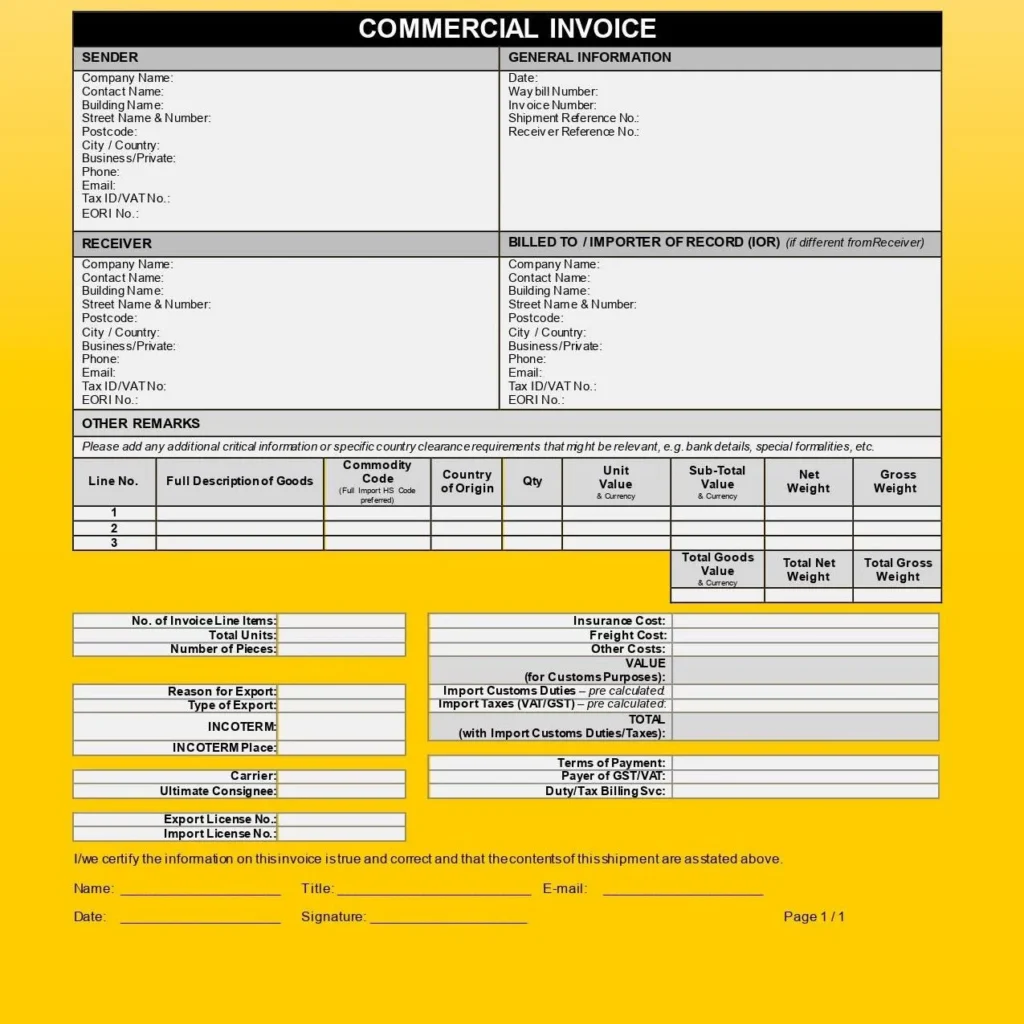
The commercial invoice is the single most important document in an Alibaba shipment. Customs officers use it to verify the transaction, classify the goods, and calculate duty. A missing or inconsistent field is one of the top causes of clearance delays.
Fields that must be present
| Field | Why it matters |
|---|---|
| Seller & buyer (name, address) | Identifies the parties for customs and the broker |
| Invoice number & date | Unique reference; must match the packing list |
| Item description | Must be specific — never “gift”, “sample”, or “parts” |
| HS code | Drives the duty rate; confirm it with our HS code lookup |
| Quantity & unit price | Basis for the declared value |
| Total value | Used to assess duty and import VAT |
| Incoterm (e.g. FOB) | Shows who pays freight and insurance |
| Country of origin | Determines any preferential duty rate |
Why accuracy matters
Under-declared values and vague descriptions trigger inspections and penalties. Match the invoice exactly to the packing list and the HS code you used for the quote so the three documents tell the same story. For a deeper walkthrough, see HS codes for Alibaba buyers, and for how duty is worked out read import duty explained.
Invoice vs. packing list
The invoice proves the sale and the value; the packing list proves what is physically in the cartons. Keep them consistent but separate — couriers and brokers need both.