
Australia Anti-Dumping and Safeguard Measures by HS Code
Table of Contents
You find a steel product on Alibaba at a great price. The supplier quotes FOB Shanghai, you calculate freight and duty at the standard rate, and the numbers work. Then the shipment arrives in Australia — and the customs bill is double what you expected.
What you missed may be the anti-dumping duty.
Australia has one of the most active anti-dumping regimes among developed economies. In 2026 alone, the Anti-Dumping Commission has issued multiple findings against Chinese steel and aluminium products. For hot rolled coil steel, the combined anti-dumping and countervailing duties reached as high as 82.4% in May 2026. Other steel products — such as reinforcing bars, wire rods, and hollow structural sections — have faced duties ranging from 23.7% to 53.1%. Aluminium products, including aluminium zinc coated steel and aluminium extrusions, are also under close scrutiny.
Beyond metals and manufactured goods, the Commission has also directed measures at a range of chemical products, such as glyphosate, 2,4-D, ammonium nitrate, and titanium dioxide.
If you are sourcing any of these categories from China, checking the standard tariff rate is not enough. The real risk — and the real cost — lies in whether your product is covered by a current anti-dumping measure.
What Are Anti-Dumping Duties?
The Basics
Anti-dumping duties are additional tariffs imposed on imports sold at prices below their normal value in the country of origin. Australia also applies countervailing duties on subsidised goods. Both are administered by the Anti-Dumping Commission (ADC) and enforced by the Australian Border Force (ABF).
Key rule: Anti-dumping duties apply regardless of free trade agreements — the China-Australia FTA (ChAFTA) 0% tariff does not exempt goods from anti-dumping measures. Both apply independently.
How Rates Work
Duty rates can be structured in different ways :
| Rate Type | Description | Example |
|---|---|---|
| Fixed percentage | Ad valorem duty on customs value | 36% of declared value |
| Floor price mechanism | Duty = shortfall between floor price and export price | Zero if export price meets floor |
| Combined AD+CVD | Anti-dumping + countervailing duty | Up to 116.9% for non-cooperating exporters |
| Exporter-specific | Individual rate vs residual rate | Named exporters get lower rates |
Important: Duties are imposed on a retrospective basis. If you import goods between a preliminary determination and final finding, you may be liable for duties applied retroactively.
Australia Anti-Dumping Actions on Chinese Products (2026)
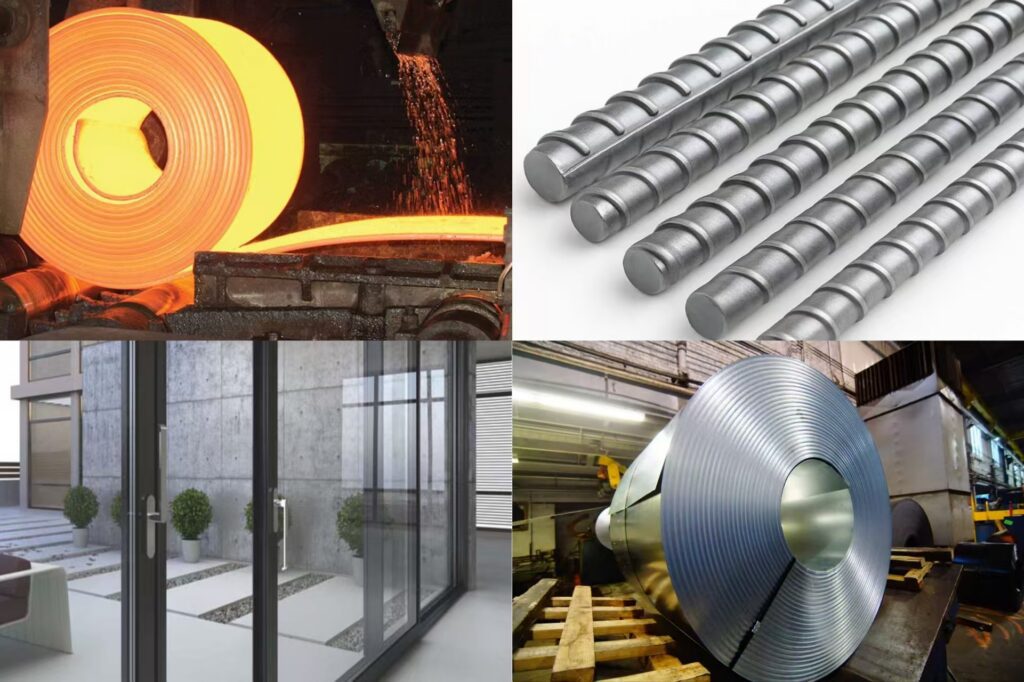
Hot Rolled Coil Steel — 82.4% Combined Duty
On May 4, 2026, the ADC issued its final determination on hot rolled coil steel from China:
| Exporter Category | AD Rate | CVD Rate | Combined |
|---|---|---|---|
| Baoshan Iron & Steel, Baosteel Zhanjiang, Shanghai Meishan, Hunan Valin | 36.0%–104.1% | 0% | 36.0%–104.1% |
| All other Chinese exporters | — | — | 82.4% |
The duty applies retroactively to goods exported from December 23, 2025. HS codes covered: 18 specific 10-digit codes under headings 7208, 7211, 7225, and 7226.
Reinforcing Bar (Rebar) — 23.7%
The ADC raised the anti-dumping duty on Chinese steel reinforcing bar from 19% to 23.7% in April 2026, fixed for five years . A separate 3.4% countervailing duty on hot-rolled coil was confirmed from May 2026.
Aluminium Windows and Doors — Under Investigation
The ADC is currently investigating aluminium windows and doors from China (Investigation 691) :
- Scope: Complete or partially assembled window/door units, frames, panels, sashes
- Tariff classification: 7610.10.00
- Period under review: From 1 July 2021
- Status: Statement of Essential Facts due 23 September 2026; final recommendation due 25 November 2026
Risk: Duties could be applied retroactively from 2021, creating significant liability for importers.
Flat-Rolled Steel — Provisional Duties
The ADC imposed provisional anti-dumping and countervailing duties on certain flat-rolled steel products from China effective 24 June 2026:
- Chinese producers: AD rates 9.4%–51.2%, CVD rates 0%–4.5%
- HS codes covered: 7208.40.00.39, 7208.51.00.40, 7208.52.00.41, 7208.90.00.30, 7225.40.00.22, 7225.40.00.24
Additional Products Subject to Measures
| Product | Countries | Status | Duty Range | HS Codes |
|---|---|---|---|---|
| Aluminium zinc-coated steel | China (Case 695) | Final determination (new exporter review) | Floor price + 1.2% CVD | 7210.61.00.60/61/62 |
| Aluminium zinc-coated steel (≥600mm) | Korea, Vietnam (Case 698) | Investigation in progress | Pending | 7210.61.00.60/61/62, 7225.99.00.39 |
| Aluminium extrusions | China (Case 700) | Accelerated review in progress | Pending | Various |
| Aluminium extrusions (mill finish) | Malaysia | Final determination (sunset review) | LB Aluminium: floor price; Milleon: 3.4% | Various |
| Aluminium extrusions (surface finished) | Malaysia | Final determination (sunset review) | LB Aluminium: floor price | Various |
| ~~Galvanised steel~~ | ~~Korea, Vietnam~~ | ~~Withdrawn / Terminated~~ | ~~N/A~~ | ~~N/A~~ |
The 301 Tariff Factor
What the 12.5% Means for Australia
In July 2026, the U.S. imposed new Section 301 tariffs on imports from 60 economies following a forced labour investigation. For China, the rate is 12.5%. For Australia, this tariff applies to goods exported from China into Australia — not to goods from Australia entering the U.S. .
The key point: The 12.5% Section 301 tariff on Chinese goods entering Australia stacks with any applicable anti-dumping duties. If your product is subject to both, the total tariff burden can exceed 100% of the customs value.
How to Check Anti-Dumping Status by HS Code
- Identify your 10-digit Australian tariff classification — Use our HS Code Lookup tool to start your research. Australia uses a 10-digit code structure, and anti-dumping measures are attached to specific subheadings.
- Check the Anti-Dumping Commission’s Dumping Commodity Register (DCR) — The DCR is the authoritative source for active measures, rates, and exporter-specific treatments .
- Verify individual exporter rates — If your supplier is a named exporter with an individual rate, you may pay less than the residual “all others” rate .
- Check for securities during investigations — When an investigation is ongoing, you may be required to pay a security deposit. After the investigation concludes, the security may be converted to interim or final duty .
What Alibaba Buyers Should Do
Before Placing an Order
- Confirm the exact 10-digit HS code — Anti-dumping measures are applied at the subheading level. A single digit difference can determine whether duty applies.
- Check the DCR for your specific HS code — Search the DCR and confirm the current rate for your product and exporter.
- Ask your supplier about their duty history — Has this exporter been subject to anti-dumping investigations before? Do they have an individual rate or face the residual rate?
- Factor anti-dumping duty into your landed cost — Do not assume the standard duty rate. Add the applicable AD/CVD rate to your cost model.
- Plan for retrospective liability — If you import during an investigation period, final duties may be higher than interim rates. Consider securities or duty assessment applications.
5 Steps Before You Order (Short Version)
- Check the category – Is your product in the high‑risk list? (steel, aluminium, chemicals, etc.) If not, you’re probably safe.
- Ask your supplier three precise questions – Have they exported to Australia before? Were they charged anti‑dumping duties? At what rate? Can they provide past customs documents (redacted)?
- Search the DCR – Use the supplier’s company name to check the Dumping Commodity Register. Look for their specific rate vs. “all others”.
- Stress‑test your cost – Add a worst‑case tariff buffer (e.g., 25‑80%) to your landed cost. If the numbers still work, proceed; if not, reconsider the product or supplier.
- Prepare for retrospective risk – If your product is under investigation (not yet finalised), set aside funds for possible back‑duties. For larger shipments, consult a customs broker or lawyer.
Conclusion
Australia’s anti-dumping regime is active and aggressive. In 2026, Chinese steel and aluminium products face duties ranging from 23.7% to over 82%, with new investigations and retroactive applications creating significant risk for importers.
The 12.5% Section 301 tariff stacks on top of these duties, meaning the total tariff burden on some Chinese products can exceed 100% of the customs value. For Alibaba buyers, the lesson is clear: verify your HS code, check the DCR, and factor anti-dumping duties into your landed cost before confirming any order.
Use our HS Code Lookup tool to identify your product’s Australian tariff classification. Use our Transit Matrix to plan shipping timelines that account for potential customs delays if your goods are subject to investigation. A few minutes of research upfront can save thousands in unexpected duties.