
UK Shipping Modes: Air vs Sea vs Truck Freight
Table of Contents
When you buy from Alibaba and ship to the UK, you have three main transport options: air, sea, or truck (via rail/road combinations). Each offers a different balance of speed and cost. But the cheapest option is not always the best—and the fastest is not always the most practical.
This guide compares the three modes for UK-bound shipments in 2026, explains the tax rules that apply regardless of how you ship, and helps you choose the right mode for your cargo.
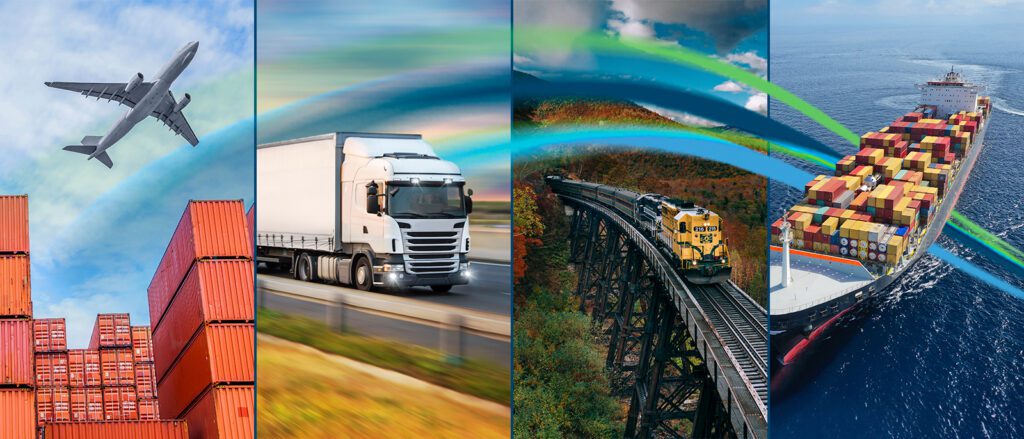
Quick Comparison: Air vs Sea vs Truck
| Factor | Air Freight | Sea Freight | Truck (Rail/Road) |
|---|---|---|---|
| Transit Time | 7–12 days | 30–45+ days | ~20 days |
| Cost | Highest | Lowest | Mid-range |
| Best For | Urgent, high-value, low-volume | Large, non-urgent shipments | Mid-volume, balanced speed |
| Carbon Footprint | Highest | Lowest (per kg) | Mid-range |
| Reliability | High | Variable (weather, congestion) | Moderate |
Air Freight: Speed at a Premium

Transit Time: 7–12 Working Days
Air freight is the fastest way to get goods from China to the UK. Typical door-to-door timelines are 7–12 working days, depending on the service (express vs. standard air cargo).
How it works: Your goods are flown from a Chinese airport (Shanghai, Guangzhou, Shenzhen, Hong Kong) to a UK hub (London Heathrow, Manchester, East Midlands). From there, they are trucked to the final destination.
Cost structure: Air freight is priced by chargeable weight (actual or volumetric, whichever is higher). This makes it expensive for bulky, low-weight items but cost-effective for compact, high-value goods.
Best use cases:
- Urgent restocks
- High-value electronics or fashion items
- Samples and prototypes
- Time-sensitive launches or promotions
Customs Considerations
Air shipments are subject to the same UK import rules as sea freight:
- VAT at 20% applies on the total value (product + shipping + duty)
- Duty only applies if value exceeds £135
- Customs clearance is typically faster (1–2 days) but can be delayed if documentation is incorrect
Sea Freight: The Cost-Effective Workhorse
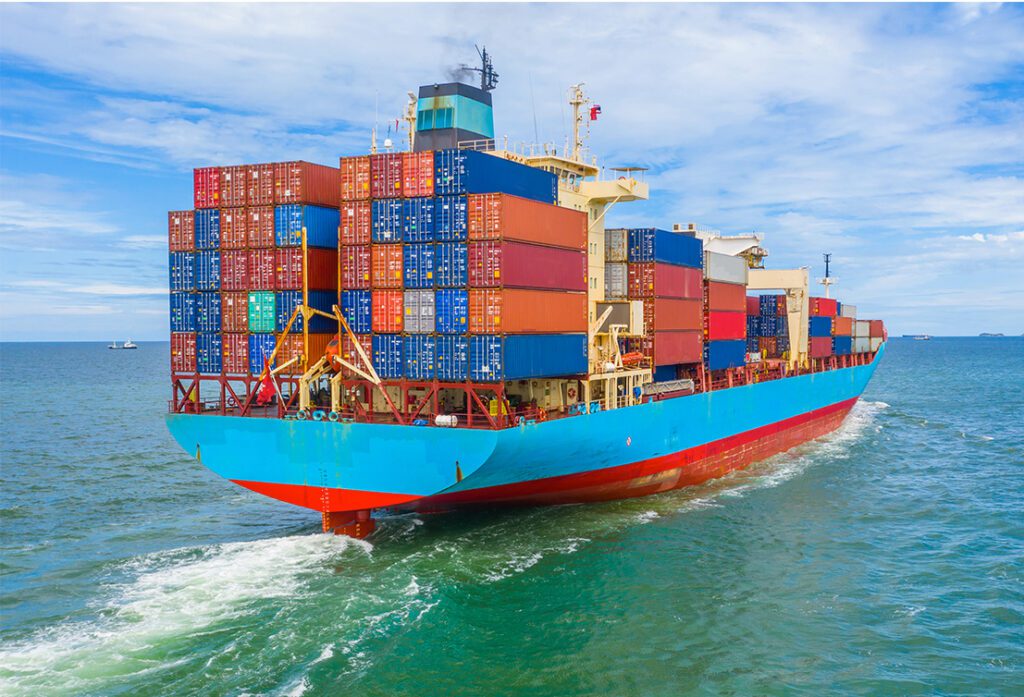
Transit Time: 30–45+ Days
Sea freight is the slowest option, with transit times ranging from 30 to 45 days (or more, depending on weather and port congestion). Door-to-door timelines are longer when factoring in inland transport in both China and the UK.
How it works: Your goods are loaded into a container at a Chinese port (Shanghai, Ningbo, Guangzhou, Shenzhen) and shipped to a UK port (Felixstowe, Southampton, London Gateway). From there, they are trucked or railed to the final destination.
Cost structure: Sea freight is priced per container (FCL – Full Container Load) or per cubic meter (LCL – Less than Container Load). It is the cheapest option per kilogram, especially for large volumes.
Best use cases:
- Large, non-urgent orders
- Heavy or bulky items
- FBA shipments (if you plan 6–8 weeks ahead)
Customs Considerations
Sea freight shipments are subject to the same VAT and duty rules as air freight. However:
- Customs clearance can take 2–5 days for sea shipments, longer if goods are inspected or documentation is incomplete.
- Storage and demurrage fees can accumulate quickly if your goods are not cleared promptly.
- Ensure you have an EORI number and a UK-based customs broker if you are not using a courier service.
Truck Freight (Rail/Road): The Middle Ground
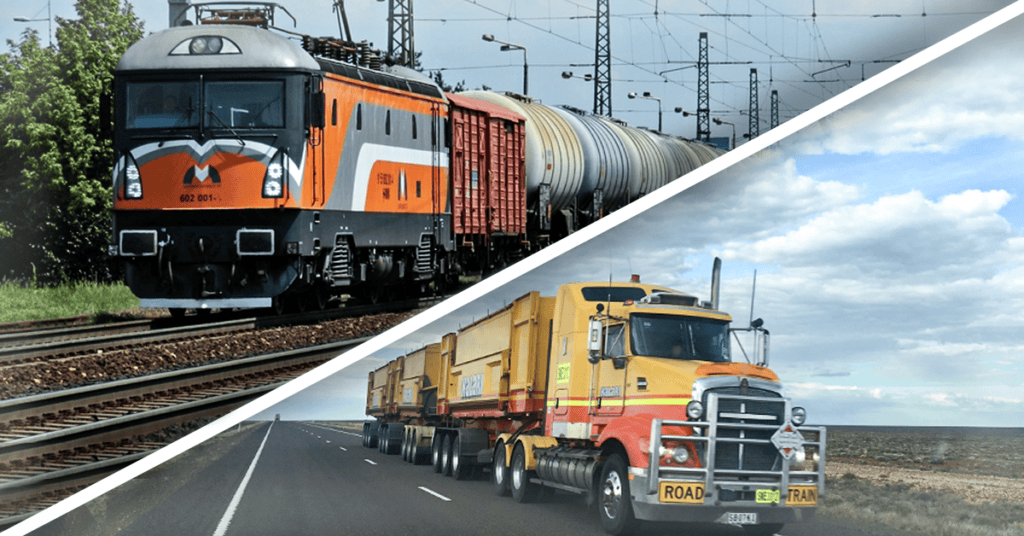
Transit Time: ~20 Days
Truck (rail/road) freight offers a middle ground between air and sea. The China-Europe Railway Express (rail to Europe, then truck to the UK) typically takes around 20 days door-to-door . The alternative is road freight via the Trans-Siberian or other overland routes, which takes 25–35 days.
How it works: Your goods are loaded onto a train in China (Xi’an, Yiwu, Chongqing), shipped across Russia and Eastern Europe to a European hub, then trucked to the UK. The service is also known as the China-Europe Railway Express or Silk Road Railway.
Cost structure: Truck (rail/road) freight is more expensive than sea but cheaper than air. It is priced per container or per pallet. The per-unit cost is competitive for goods where time is a factor but budget is a concern.
Best use cases:
- Goods that are too urgent for sea but too heavy/voluminous for air
- Time-sensitive items where a 20-day lead time is acceptable
- Mid-value consumer goods
Customs Considerations
Truck (rail/road) freight shipments enter the UK via the Channel Tunnel or roll-on/roll-off ports (Dover, Felixstowe) after crossing Europe.
- Customs clearance may occur at the first point of entry (e.g., Rotterdam, Calais), not necessarily at the UK border.
- Documentation must be pre-filed under the UK’s Customs Declaration Service (CDS). Ensure your customs broker submits the entry before the goods arrive.
UK Tax Rules: The Same for All Modes
VAT: Always Apply, Always 20%
Regardless of shipping mode, UK Import VAT (currently 20%) applies to all commercial goods entering the UK . VAT is calculated on the total value of the goods, which includes:
- The customs value (product price)
- Plus shipping and insurance costs up to the UK border
- Plus any customs duty owed
Example: A £1,000 shipment with £100 shipping and 2% duty :
- Customs duty: £1,100 × 2% = £22
- VAT: £1,122 × 20% = £224.40
Total extra cost: £246.40 + courier handling fee.
The £135 Duty-Free Threshold
You only pay customs duty if the item value exceeds £135 . However, VAT still applies on goods below £135. Low-value parcels are duty-free but not tax-free.
De Minimis Matters
The de minimis threshold for the UK is £135 for customs duty, but there is no threshold for VAT —every commercial shipment is subject to VAT unless specifically exempt . Our Transit Matrix shows the de minimis threshold for each destination, so you can plan your shipping budget accordingly.
Making the Right Choice for Your Shipment
Use the Transit Matrix
Our Transit Matrix is designed to help you compare modes for your specific destination lane . For UK-bound shipments:
| Mode | Transit Time | Cost per kg (approximate) |
|---|---|---|
| Air | 7–12 days | £5.00–£8.00 |
| Sea | 30–45 days | £0.50–£1.50 |
| Truck (Rail/Road) | ~20 days | £2.50–£4.00 |
These are indicative ranges for 2026; actual costs vary by route, carrier, and fuel prices.
Decision Framework
Choose air freight if:
- Your shipment is urgent (restocks, promotions, launches)
- Your goods are high-value or time-sensitive
- You are shipping samples or low volumes
Choose sea freight if:
- Your goods are heavy, bulky, or non-urgent
- You have a full container load (FCL) or are consolidating LCL
- You are planning inventory for 6+ weeks ahead
Choose truck (rail/road) freight if:
- You need something faster than sea but cannot justify air costs
- Your goods are mid-value and volume
- You can plan around a 20-day lead time
Final Thoughts
Shipping to the UK in 2026 offers three viable modes—air, sea, and truck. Each has its own strengths: air is fastest, sea is cheapest, and truck sits in the middle. But regardless of which mode you choose, the tax rules are the same: VAT at 20% applies to all commercial shipments, and duty only applies above £135.
Plan your shipping timeline and budget using our Transit Matrix to compare modes.