
EU Anti-Dumping Duties by HS Code: What Alibaba Buyers Face
Table of Contents
You check the MFN duty rate for your product. You factor in VAT and shipping. Then the customs bill arrives—and it is much higher than expected.
What you missed may be an anti-dumping duty, which is one of the reasons why your final total landed cost is so high.
Unlike standard tariffs, anti-dumping duties are product-specific, country-specific, and can be staggeringly high. For Alibaba buyers shipping to the EU, these duties can add 36% or more to the cost of a shipment. Worse, they stack on top of other tariffs, including Section 301 duties.
This guide explains how EU anti-dumping duties work, which products are affected, and how to check your exposure.
What Are Anti-Dumping Duties?
The Definition
An anti-dumping duty is a customs tariff imposed on imported products believed to be sold at unfairly low prices—below their normal value or production cost in the country of origin. The EU applies these duties to protect domestic industry from injury caused by unfair trade practices.
Who Is Affected?
Goods from China are most frequently affected, but the EU also imposes anti-dumping duties on imports from India, South Korea, Egypt, Thailand, and Turkey. For Alibaba buyers, China is the primary concern.
How Anti-Dumping Duties Are Applied
The TARIC Code System
Anti-dumping duties in the EU are identified through the TARIC (Tarif Intégré de la Communauté) system—the 10-digit customs code used for import declarations. The 9th and 10th digits of the TARIC code indicate whether a product is subject to trade remedy measures like anti-dumping or countervailing duties.
Example: For ceramic tableware and kitchenware, the TARIC codes include 6911 10 00 90, 6912 00 21 11, and 6912 00 21 91. These specific TARIC codes identify products subject to the 36.1% anti-dumping duty.
The Process
The European Commission investigates suspected dumping and publishes implementing regulations identifying:
- Products subject to duties
- Countries and suppliers targeted
- Duty rates per manufacturer or category
- Duration of measures (typically five years)
Common Chinese Products Subject to EU Anti-Dumping Duties
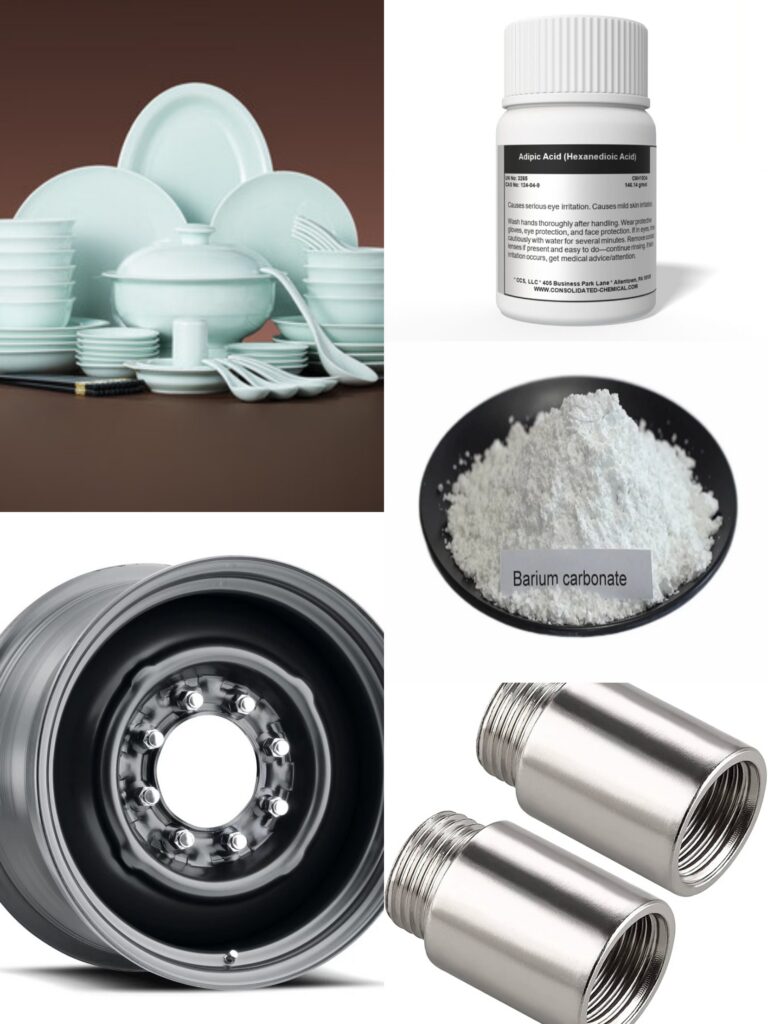
Barium Carbonate; Adipic Acid;Threaded Tube or Pipe Cast Fittings
Ceramic Tableware and Kitchenware
HS Codes: ex 6911 10 00, ex 6912 00 21, ex 6912 00 23, ex 6912 00 25, ex 6912 00 29
| Category | Duty Rate |
|---|---|
| Companies with individual rates | 13.1% – 18.3% |
| All other companies | 36.1% |
Following an expiry review published in October 2025, the EU maintained these duties. A $10,000 shipment of ceramic tableware faces over $3,600 in anti-dumping duties alone.
Steel Wheels
HS Codes: ex 8708 70 10, ex 8708 70 99, ex 8716 90 90
| Category | Duty Rate |
|---|---|
| Cooperating companies | 50.3% |
| All other companies | 66.4% |
On February 26, 2026, the EU concluded a sunset review and maintained these duties, finding that dumping and injury would continue or recur if measures were lifted.
Adipic Acid (Chemical)
HS Code: ex 2917 12 00 (TARIC: 2917 12 00 10)
| Category | Duty Rate |
|---|---|
| Chongqing Huafon Chemical | 29.1% |
| Tangshan Zhonghao Chemical | 42.3% |
| Other cooperating companies | 31.5% |
| All other Chinese producers/exporters | 42.3% |
The final ruling was published on May 5, 2026.
Barium Carbonate
HS Code: ex 2836 60 00
| Category | Duty Rate |
|---|---|
| Cooperating companies | 72.6% – 83.9% |
| All other companies in China | 83.9% |
A provisional anti-dumping duty was imposed in August 2025.
Threaded Tube or Pipe Cast Fittings
HS Codes: ex 7307 19 10, ex 7307 19 90
| Category | Duty Rate |
|---|---|
| Cooperating companies | 24.6% – 57.8% |
| All other companies | 57.8% |
How Anti-Dumping Duties Stack with Other Tariffs
The Stacking Effect
Anti-dumping duties do not replace other tariffs—they add to them.
For a ceramic tableware shipment:
| Tariff Component | Rate |
|---|---|
| MFN duty (standard) | Varies by product |
| Anti-dumping duty | 36.1% (or higher) |
| Section 301 (if applicable) | Top-up to 10% |
| Total tariff burden | MFN + 36.1% + Section 301 |
The combined effect can make a profitable shipment unprofitable.
Section 301 and the 10% Cap
On July 24, 2026, the U.S. imposed new Section 301 tariffs on imports from 60 economies following a forced labor investigation. For the EU, these tariffs are capped at 10% combined (MFN + Section 301).
Key point: Anti-dumping duties are not subject to this cap. They are separate trade remedy measures and can be applied on top of the 10% total.
How to Check if Your Product Is Affected
Step 1: Identify Your Product’s HS Code
Start with the six-digit HS code from your supplier. Then determine the full 10-digit TARIC code for EU import.
Step 2: Search the TARIC Database
The European Commission publishes implementing regulations that identify:
- Products subject to anti-dumping duties
- Countries and suppliers targeted
- Duty rates per manufacturer or category
Search your product’s TARIC code in the EU’s online TARIC database. The 9th and 10th digits will indicate whether trade remedy measures apply.
Step 3: Check for Individual Exporter Rates
Anti-dumping duties can vary by exporter. Some manufacturers may have lower rates, while others face the full residual rate. If your supplier is a specific named exporter, they may benefit from a lower rate.
Step 4: Confirm with Official Sources
The most reliable sources are:
- EU TARIC database (official customs tariff)
- Official Journal of the European Union (implementing regulations)
- Binding Tariff Information (BTI) – a formal ruling from EU customs
What Alibaba Buyers Should Do
Before You Order
- Get the full 10-digit TARIC code from your supplier or determine it yourself
- Search the TARIC database for anti-dumping indicators
- Check the duty rate—some products face rates over 50%
- Factor the cost into your landed cost calculations
During the Order Process
- Ask your supplier if they have an individual anti-dumping rate
- Request documentation to support any claim of lower duty rates
- Consult a customs broker for complex or high-value shipments
Use the Tools Available
- Our HS Code Lookup tool can help identify the six-digit starting point
- Our Transit Matrix can help you plan shipping timelines—because customs delays from classification errors can be costly
Conclusion
EU anti-dumping duties are not rare or theoretical. They apply to common Chinese products like ceramics, steel wheels, chemicals, and fittings—often at rates above 30% and sometimes exceeding 80%.
The costs stack on top of MFN tariffs, Section 301 duties, and other charges. A product that looks profitable at the MFN rate can become a loss-maker once anti-dumping duties are applied.
The solution is simple: verify your product’s TARIC code before you commit. Search the EU database. Check for individual exporter rates. Factor the cost into your landed cost. A few minutes of research upfront can save thousands of dollars in unexpected duties.